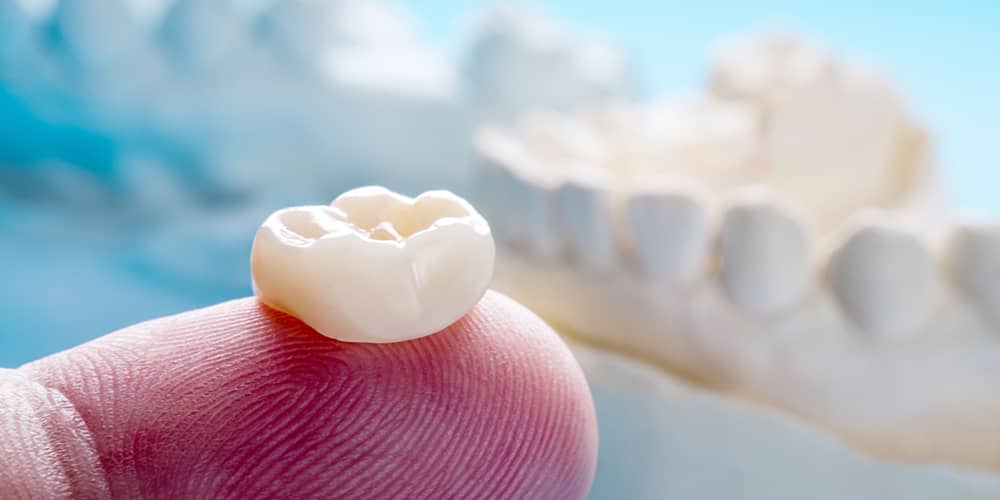
The Dental Crown Procedure
A tooth crown procedure usually requires two appointments in our Bronx, NY office. At your first appointment, while your tooth is numb, the dentist will prepare your tooth by removing any decay and shaping the surface to properly fit the dental crown. Next, we'll take several highly accurate molds (or impressions) that will be used to create your custom tooth crown. A mold will also be used to create a temporary crown, which will stay on your tooth for approximately two weeks until your new dental crown is fabricated by a dental laboratory. Your temporary crown will be placed with temporary cement, and your bite will be checked to ensure you are biting properly.
At your second appointment in our Bronx, NY office, your temporary crown will be removed, the tooth will be cleaned, and your new tooth crown will be carefully placed to ensure the spacing and bite are accurate.
For patients who are restoring multiple teeth, our practice also provides dental bridges in the Bronx as a complementary solution to crowns.
Types of Dental Crowns
The right crown material depends on where the tooth is in your mouth, how much chewing force it handles, and how natural you want it to look. Your dentist will recommend the best option for you.
- Porcelain or ceramic crowns. These are the most natural-looking option and a popular choice for front teeth.
- Porcelain-fused-to-metal crowns. These combine a strong metal base with a tooth-colored porcelain surface, making them a good fit for back teeth.
- Gold and metal crowns. These are extremely durable and gentle on opposing teeth, and they're often used for molars that aren't visible when you smile.
- Resin crowns. These are a more affordable option, sometimes used as a temporary or short-term solution.
For patients who are restoring multiple teeth, our practice also provides dental bridges in the Bronx as a complementary solution to crowns.
Do I Need a Crown or a Filling?
A tooth filling works well for small to moderate cavities. When decay or damage affects a large part of the tooth, there isn't enough healthy structure left to hold a filling, and the tooth is at risk of cracking. A crown covers and protects the entire tooth, so it's the stronger choice for badly damaged teeth, teeth with large old fillings, and teeth that have had a root canal.
If your main goal is improving the look of a tooth that's otherwise healthy, cosmetic bonding or porcelain veneers may be a more conservative option.
